


Page 6 - reflections_newsletter_June8_2022
P. 6
REFLECTIONS                                                                                                                                             dae mia
Dyslipidaemia Global Newsletter #2                                Dyslipi
                                                                  Dyslipi
                                                                                                                                                        aim ead

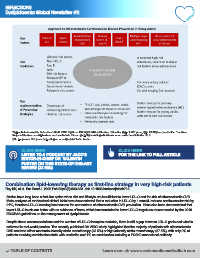
*hypercholesterolaemia defined as LDL-C =190 mg/dL or 160 mg/dL with risk factors. †Duration (type 1 >20 years, type 2 >10 years) and either 1 or more
major risk factors or complications such as diabetic microangiopathy including albuminuria or an ankle brachial index <0.9.
‡No progress in 2-5 years depending on severity of risk factor burden.

CLICK HERE                          CLICK HERE
LISTEN TO A PODCAST BY JACC’S       FOR THE LINK TO FULL ARTICLE
EDITOR-IN-CHIEF DR. VALENTIN
FUSTER ON THIS STATE-OF-THE-ART
REVIEW (33 MIN)

Combination lipid-lowering therapy as first-line strategy in very high-risk patients.

Ray KK, et al. Eur Heart J. 2022 Feb 22;43(8):830-833. doi: 10.1093/eurheartj/ehab718.

Statins have long been a first-line option when diet and lifestyle are insufficient to lower LDL-C and the risk of atherosclerotic CVD.
Meta-analyses of randomized clinical trials have demonstrated that a reduction in LDL-C by 1 mmol/L reduces cardiovascular risk by
21%, therefore LDL-C lowering has become the cornerstone of atherosclerotic CVD prevention. It has also been demonstrated that
lower LDL-C levels are better with no evidence of harm, which has translated to lower LDL-C targets as recommended by the 2019
ESC/EAS guidelines on the management of dyslipidaemia.

Despite these recommendations and the number of LDL-C therapies available, there is still a gap between LDL-C goals and what is
achieved in real-world practice. The recently published DA VINCI study highlighted that the majority of patients with atherosclerotic
CVD received either moderate-intensity statin monotherapy (43.5%) or high-intensity statin monotherapy (37.5%), with only 9% of
patients receiving combination statin with ezetimibe and 1% on combination including a PCSK9 monoclonal antibody.

TABLE OF CONTENTS                   Learn more at: www.serviercardiomedicalhub.com

